Scientific Name
Agave americana L.
Synonym(s)
Agave spectabilis, Aloe americana
Common Name(s)
American Agave, American Aloe, American Century Plant, Century Plant, Maguey, Mexican Soap Plant
Scientific Classification
Family: Asparagaceae
Subfamily: Agavoideae
Genus: Agave
Etymology
The specific epithet "americana" (pronounced "a-mer-ih-KAY-na") means "American; of or pertaining to America" and refers to the origin of this species.
Origin
Agave americana is native to Mexico and the southern United States.
Description
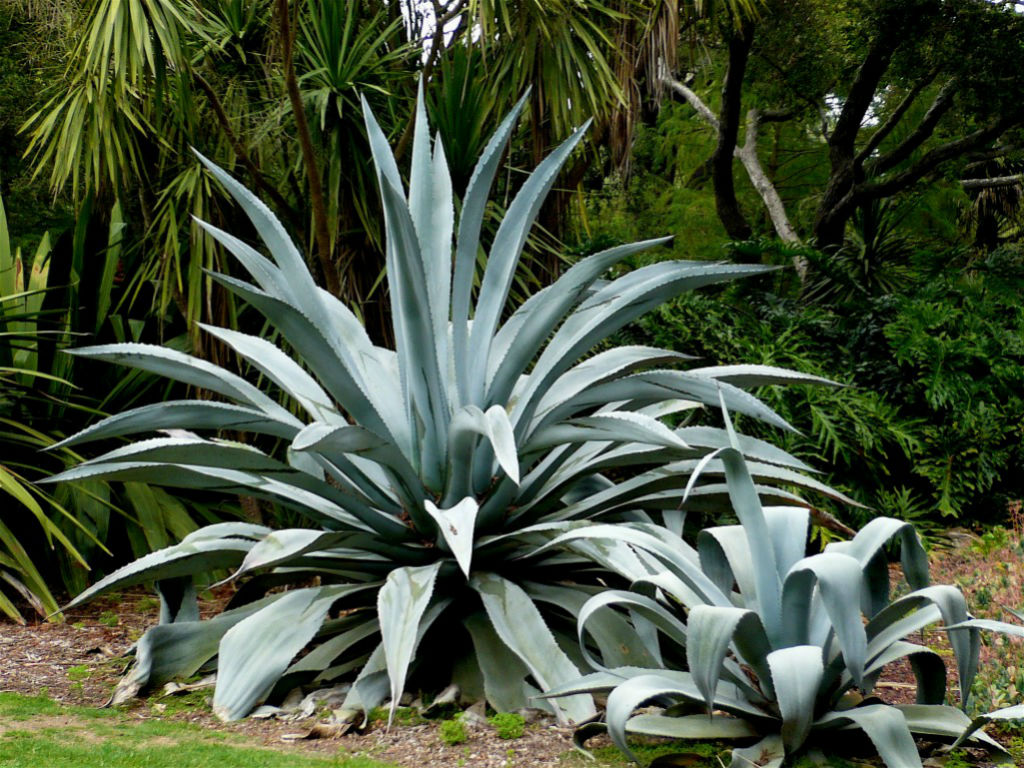
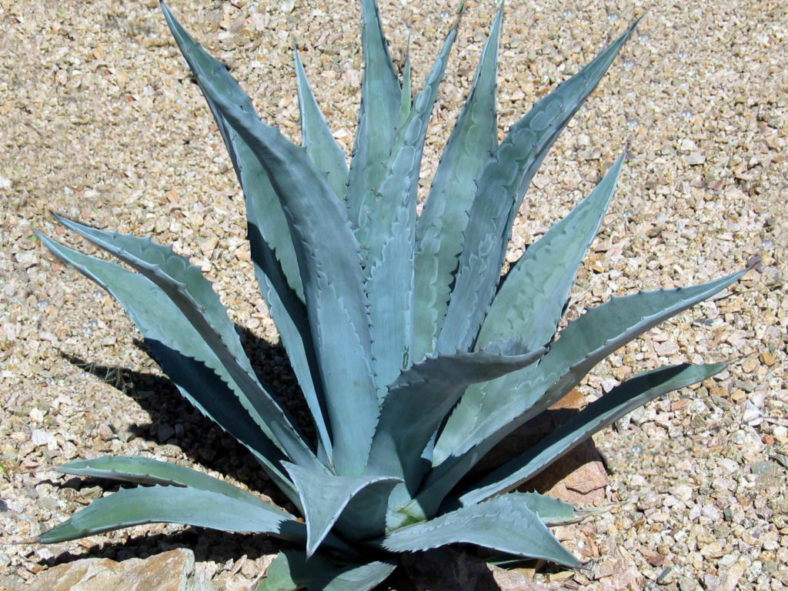
Agave americana is a popular succulent that forms large, stemless or short-stemmed rosettes of grey-green to blue-green leaves with sharp marginal spines and a dark brown terminal spine. The rosettes can reach up to 6 feet (1.8 m) in height and 10 feet (3 m) in diameter. The leaves are covered with a fine, waxy bloom and can measure up to 6.6 feet (2 m) long and 10 inches (25 cm) wide.
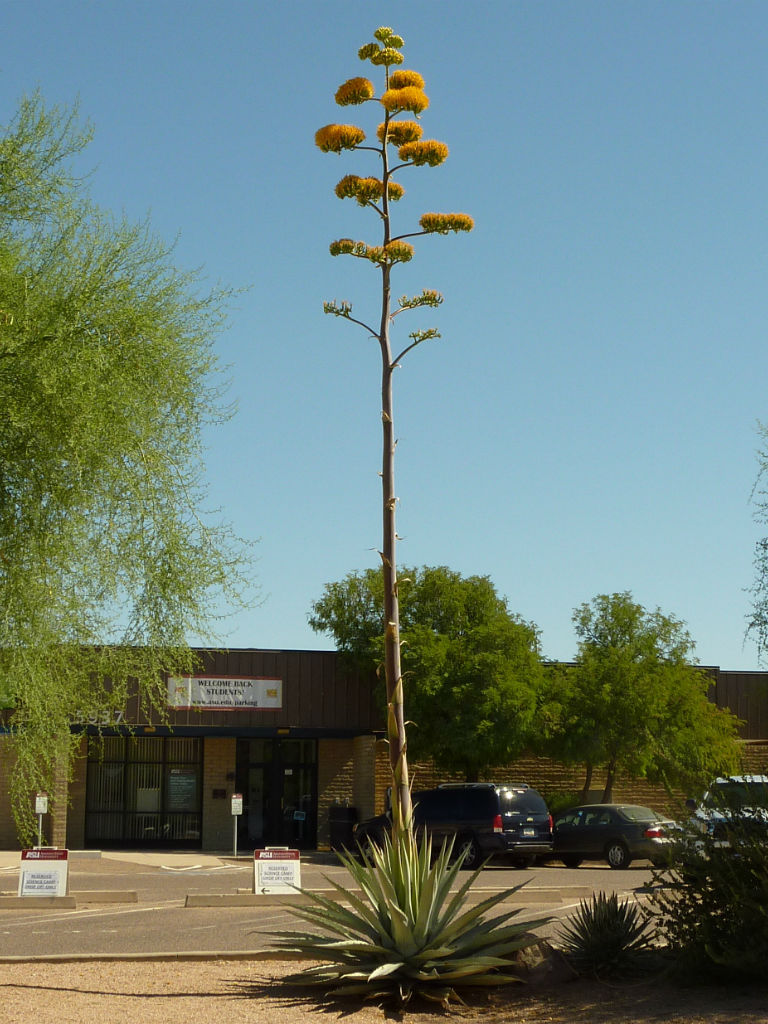
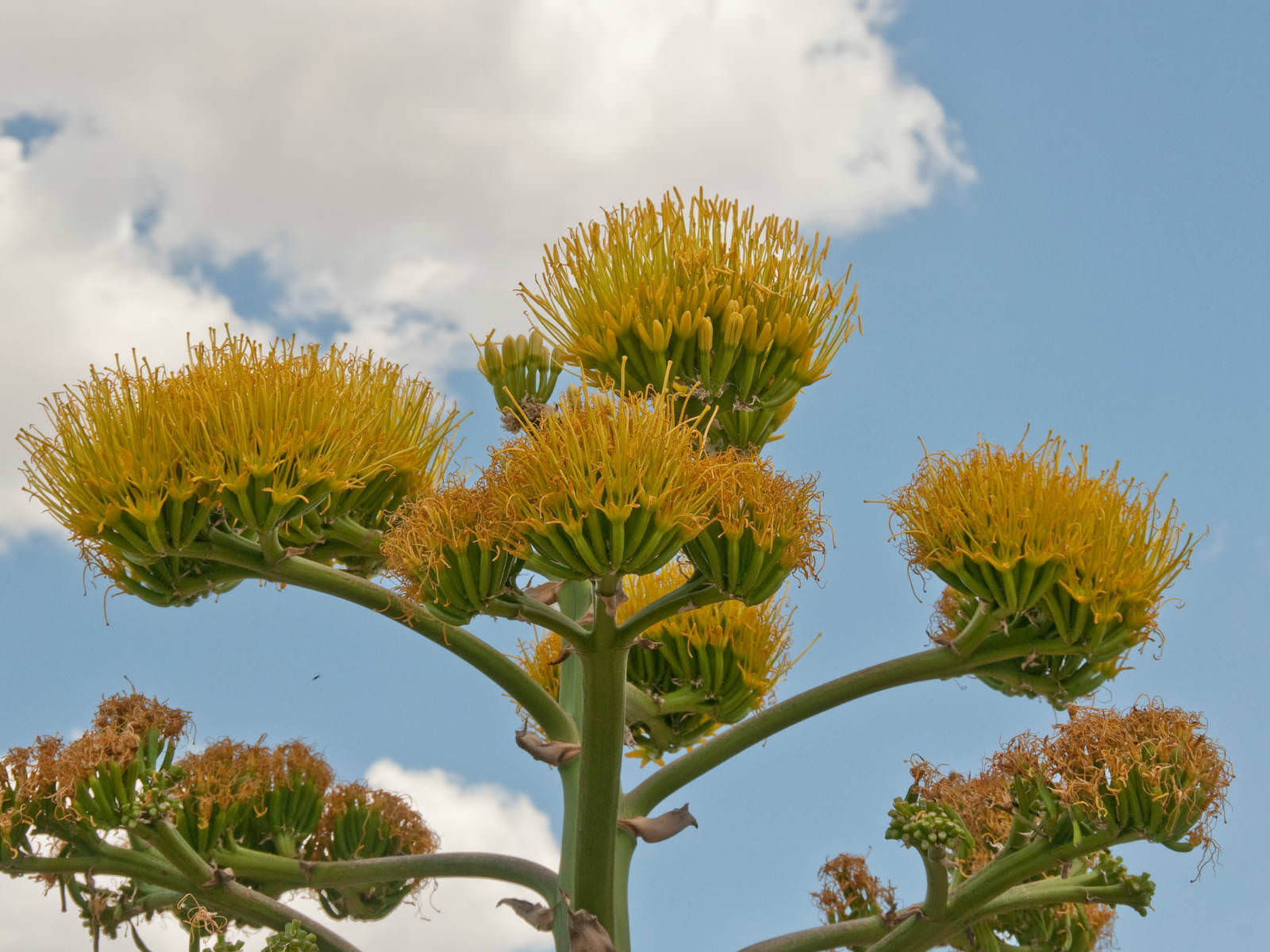
Despite its common name, "Century Plant," the rosettes typically live between 10 and 30 years. Near the end of their lives, the rosettes send up a stout, branched flower stalk. The stalk can grow up to 30 feet (9 m) tall. The flowers are yellow or greenish-yellow, occur in panicles at the branch ends, and can reach up to 4 inches (10 cm) in length. The rosettes die after flowering but produce offsets around the base, often forming a colony of new plants. The fruits are oblong capsules with a pointed tip and can grow up to 3.2 inches (8 cm) long. They turn from green to brown as they mature.
Subspecies and Varieties of Agave americana
- Agave americana subsp. americana
- Agave americana var. expansa
- Agave americana var. franzosini
- Agave americana var. oaxacensis
- Agave americana subsp. protamericana
Cultivars of Agave americana
How to Grow and Care for Agave americana
Light: Like all Agaves, this plant requires full sun to partial shade. If growing A. americana indoors, choose a bright, sunny window with as much sun as possible. From spring to fall, it loves going outside.
Soil: A. americana will tolerate most soils with good drainage, but it prefers sandy or rocky soil.
Hardiness: During the growing season, it prefers warm temperatures, while in winter, when resting, this succulent enjoys cooler temperatures. A. americana can withstand temperatures from 10°F to 50°F (-12.2°C to 10°C), USDA hardiness zones 8a to 11b.
Watering: From spring to fall, water thoroughly when the soil becomes dry. In winter, water sparingly about once a month. Plants in containers require more frequent watering than those in the ground.
Fertilizing: For the first two years, give your A. americana a small amount of fertilizer in the spring. Established plants seem to take care of themselves.
Repotting: If you notice your A. americana becoming pot-bound, repot it with fresh soil in a slightly larger pot than the old one. Give the plant a week or so to readjust before you water it again.
Propagation: Since it can take years to produce seeds, A. americana is usually propagated by offsets. The best time to remove the offsets is in spring and summer. Sow the seeds in spring.
Learn more at How to Grow and Care for Agave.
Toxicity of Agave americana
A. americana is not toxic to humans but may be mildly poisonous to children and pets.
Uses of Agave americana
The plant's juice has antiseptic, wound-healing, and anti-inflammatory properties. It has long been used in Central America to treat burns, bruises, minor cuts, injuries, and skin irritation caused by insect bites. The flower stalks and the base leaves can be roasted and consumed. A. americana is also a source of food. The flower stalks and the leaves can be cooked and consumed. In addition, a sweet juice tapped from the flower stalks can be drunk or used to make an alcoholic beverage such as pulque.
Learn more at Century Plant: Benefits, Uses, and Side Effects.
Links
- Back to genus Agave
- Succupedia: Browse succulents by Scientific Name, Common Name, Genus, Family, USDA Hardiness Zone, Origin, or cacti by Genus
Photo Gallery
Click on a photo to see a larger version.